K/NOW Dialogue Explores How Women’s Creativity Drives Economic Change: with Robin Seyfert and Diego Javier Ubfal
April 18, 2026
On Saturday, April 18, 2026, the K/NOW Dialogue series at Amy Kaslow Gallery welcomed audiences to an urgent and deeply human conversation: Artistry and Agency: Women Building Local Economies. Held in conjunction with the exhibition Folk Art is Fine Art: Textiles that Talk, the programming examined the transformative role of women artisans and entrepreneurs and how that plays into communities worldwide – from Bangladesh to Guatemala and beyond.

The dialogue featured two speakers working at very different, but complementary, scales: Robin Seyfert, founder of the Bangladesh-based social enterprise and textile collective “Basha,” and Diego Javier Ubfal, whose work as a senior economist at the World Bank Gender Group focuses on gender equality, entrepreneurship, and economic development. Together, alongside moderator Amy Kaslow, they explored a central idea: that when women gain access to education – through traditional schooling or via trades – and financial opportunity, entire economic ecosystems emerge and transform.
The conversation opened with a reflection on the exhibition itself, which highlighted women-led textile initiatives worldwide, including: She Kantha (India), Multicolores (Guatemala), Basha (Bangladesh), Chonon Biri Collective (Peru), Somporn Intaraprayong (Thailand), Turkmen Handcrafts (Afghanistan), Tikkiwallah (Laos and Thailand), Marie Alexandrine Rasoanantenaina (Madagascar), Ock Pop Tok (Laos), and Omba Arts (Namibia).

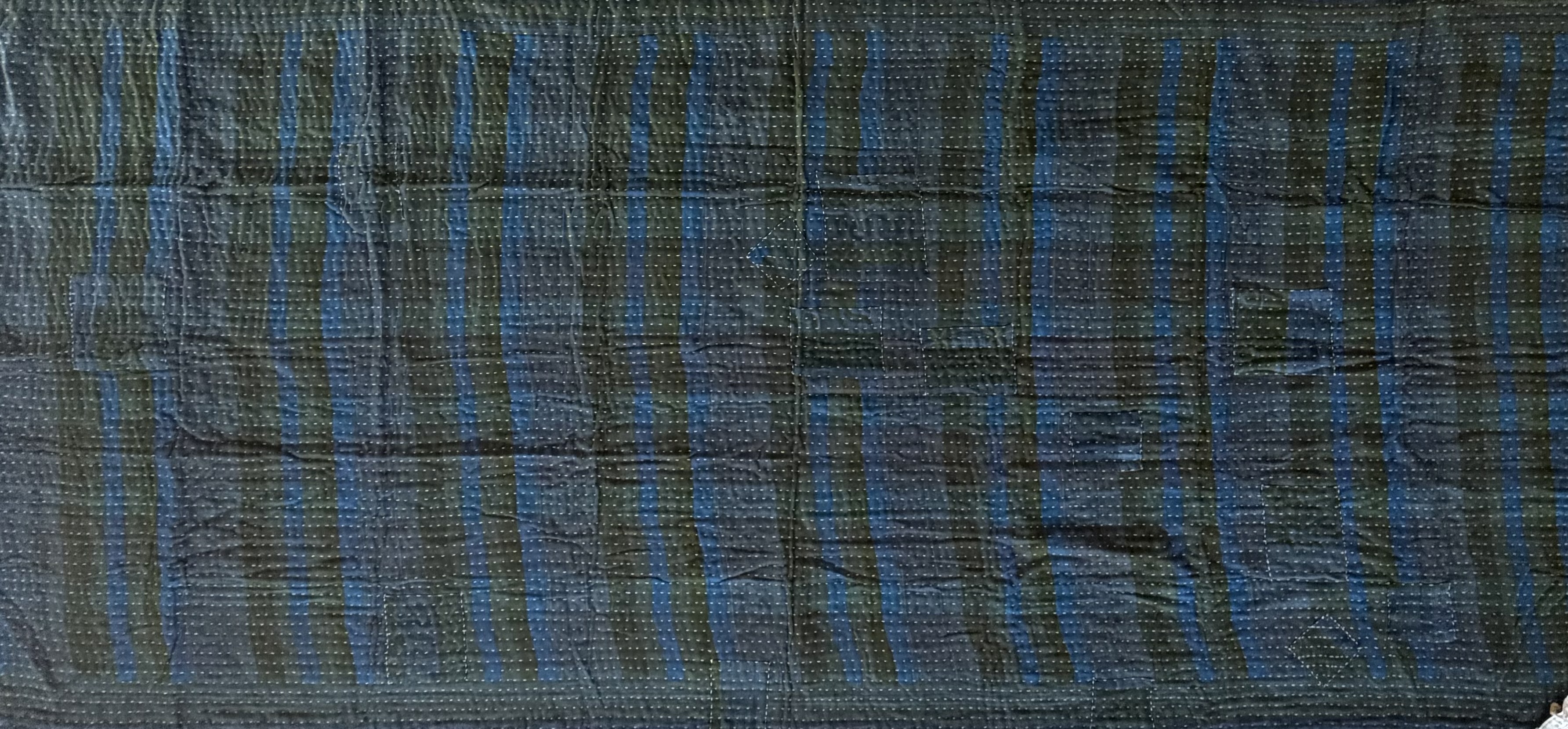
Somporn Intaraprayong's The Colony
Moderator Amy Kaslow noted that many of the featured organizations were founded by women responding directly to crisis: poverty, trafficking, violence, and social exclusion, and transforming traditional craft into pathways toward economic independence and social agency.
Ubfal contextualized this work within decades of global development research. Since 2015 alone, he explained, more than 50 million additional girls worldwide have entered school systems, with girls now equaling or surpassing boys in educational participation in most countries. He pointed to Bangladesh as a major success story, citing World Bank-supported programs in the 1990s that provided conditional cash transfers to families whose daughters remained in secondary school. The results were dramatic: by 2016, girls outnumbered boys in secondary education attendance.
Yet the discussion repeatedly returned to a more difficult question: what happens after education?
While educational gains have increased dramatically, women still face enormous barriers to fully participating in labor markets: social norms, caregiving responsibilities, limited access to credit, unsafe transportation, and gender-based violence continue to prevent many women from translating education into sustainable economic opportunity.
Seyfert’s experience in Bangladesh illustrated those challenges in starkly personal terms.
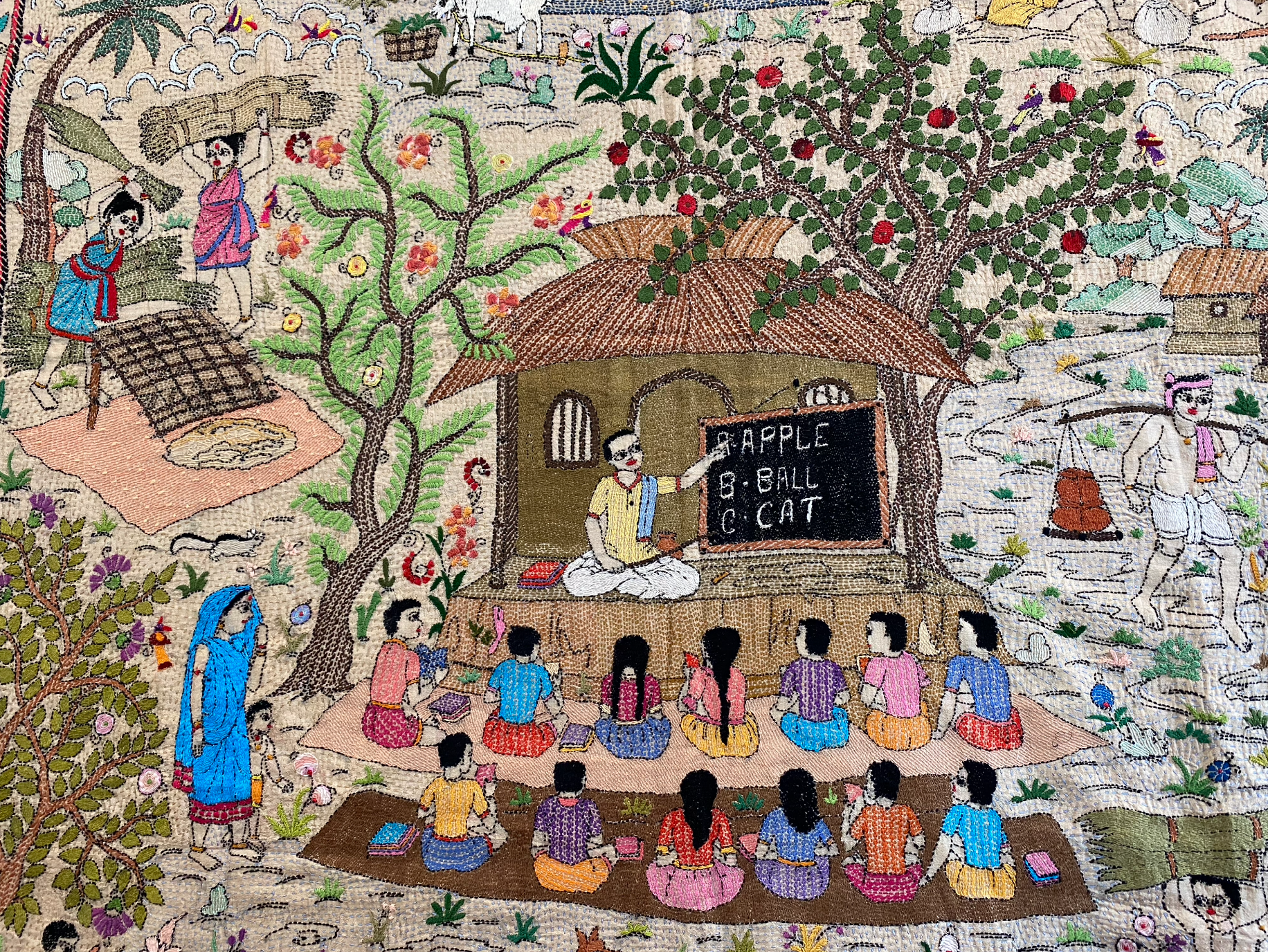
She Kantha's Pathshala, Village School
Originally traveling to Bangladesh in 2006 for public health work, she encountered girls and women who had been trafficked into prostitution under horrifying circumstances: some abducted after asking for directions, others sold by family members, or deceived with false promises of work. In response, she founded Basha, an organization that provides trauma-informed employment, counseling, literacy education, and long-term support for women escaping trafficking and exploitation.
At the heart of Basha’s work is textile production rooted in Bangladeshi craft traditions, including kantha quilting made from layered saris hand-stitched together. Seyfert described how the organization adapted traditional techniques for contemporary global markets while centering the emotional and psychological recovery of survivors.
“We didn’t choose our women because of their handicraft skills,” she explained. “We chose them because they were traumatized.”
That distinction shaped much of the dialogue.
Economic empowerment, the speakers emphasized, cannot be separated from mental health, trust-building, and long-term care.
Seyfert described Basha not simply as an employer, but as an ecosystem of support: childcare from infancy through school completion, counseling, literacy training, healthcare navigation, and a safe community. Today, despite economic setbacks stemming from the post-pandemic retail downturn, Basha supports roughly 60 artisans and 75 children, with dozens more women awaiting work opportunities.
The event also highlighted broader examples of women-led creative economies.
Kaslow spoke about Multicolores, a Guatemalan textile initiative founded in collaboration with Indigenous women weavers. By adapting traditional weaving practices and repurposing discarded T-shirts into intricate rugs, the organization has expanded into multiple villages, created healthcare access, supported children’s education, and built international recognition, including exhibitions in Milan and installations at the U.S. Embassy in Guatemala City.
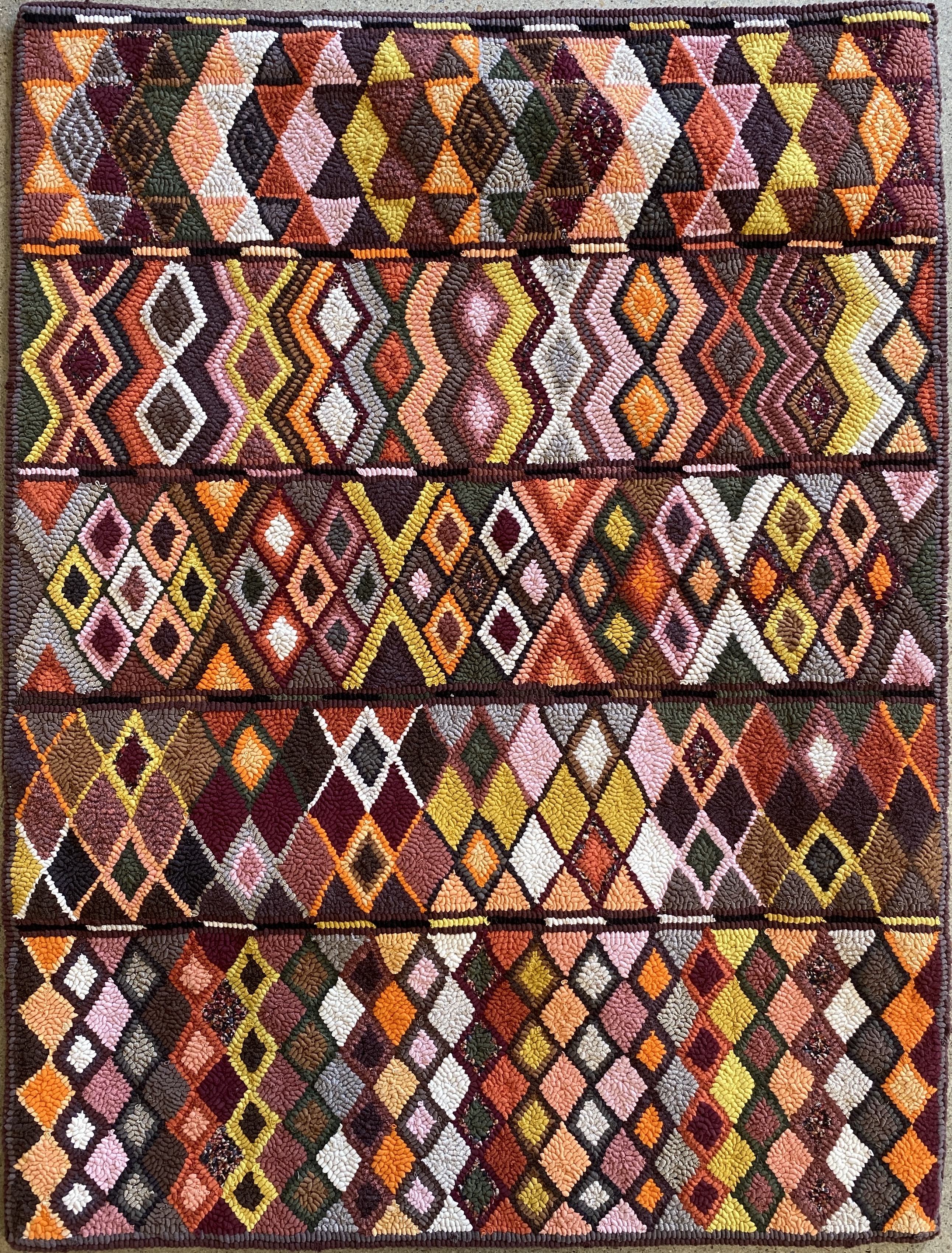
Multicolores, Untitled Artwork, 2024
Throughout the discussion, audience members raised questions about corruption in international development, the risks of economic backlash from men in patriarchal societies, and the role technology can play in women’s empowerment.
Ubfal emphasized that successful interventions increasingly combine financial support with social-emotional training, community engagement, and grassroots partnerships. Research, he noted, shows that women-led firms are significantly more likely to hire other women, multiplying economic impact across communities.
One especially moving moment came when Seyfert shared the story of “Paki,” a woman trafficked to India by her own sister-in-law and later referred to Basha after years of abuse. Initially unable to speak or communicate clearly due to her extreme trauma, she slowly rebuilt her life through the organization’s support system. Years later, Seyfert explained, she married and transitioned into an independent, stable life – an example of the long, difficult, but possible path toward recovery and agency.
By the close of the dialogue, one theme had become unmistakable: women’s economic participation is not peripheral to development; it is foundational.
Ubfal cited research suggesting that closing global gender employment gaps could increase global GDP by around 20 percent. But beyond statistics, the event continually returned to something more immediate and human: women using creativity, labor, and entrepreneurship not only to survive, but to reshape families, neighborhoods, and futures.
As Kaslow concluded, women facing extraordinary hardship are also generating extraordinary innovation and resilience. Their work, whether through textiles, farming cooperatives, education initiatives, or small businesses, continues to redefine what economic development truly looks like.
In the end, Artistry and Agency underscored that the conversation about women’s economic empowerment is also a conversation about dignity, visibility, and cultural value.
The women at the center of these initiatives are not merely beneficiaries of aid programs; they are artists, entrepreneurs, caregivers, and leaders reshaping the social and economic fabric of their communities. Whether through a hand-stitched kantha quilt in Bangladesh or a woven rug in the Guatemalan highlands, creative labor becomes a vehicle for survival, self-determination, and collective transformation. The dialogue made clear that meaningful development requires more than financial investment alone; it requires sustained belief in women’s capacity to build systems of care, resilience, and innovation from the ground up.